
Blog
Insights, updates, and deep dives on algorithmic trading, quantitative finance, and the Q314 platform.
Featured

Hackathon at the University of Cambridge with OxbridgeAIx!
AI Agent Trading Hackathon — University of Cambridge, Department of Engineering Join us for aA 6-hour in-person hackathon in Cambridge where you compete to build the best AI trading agent using Q314's no-code platform — no coding or quant finance background required. Can you build an AI agent that beats the market?

Market Rally Meets Safety Trade as Berkshire Looms Large
Stocks have ripped back to records, but the rush into Berkshire Hathaway says investors still want ballast. That split matters for traders watching the next rotation.
Market Update: Inflation, Not the Ceasefire, Is Setting the Tape, April 13, 2026
Wall Street ended Friday mixed after a hot March CPI print complicated the Fed outlook, with the S&P 500 slipping 0.11% to 6,816.89, the Dow falling 269 points and the Nasdaq still grinding higher on chip strength. The bigger story for traders now is the inflation-energy loop: 10-year Treasury yields closed near 4.31%, oil is back above $100 early Monday after the Strait of Hormuz blockade order, and rate-cut hopes are getting pushed further out.

Gold and War: Why Bullion Still Rules the Fear Trade
Gold is back at the center of global markets as war risk, oil shocks and central bank buying collide. The metal remains the cleanest hedge against a conflict that keeps spilling into inflation, rates and currencies.
All Articles
Market Update: Treasury Relief Keeps the S&P's Win Streak Alive, May 25, 2026
Wall Street went into the Memorial Day break with the bond market finally easing up. The S&P 500 rose 0.37% to 7,473.47 on Friday, its eighth straight weekly gain, while the 10-year Treasury yield slipped to about 4.56% and gave risk assets room to breathe.
Market Update: Dow Hits Another Record as Cyclical Winners Mask a Narrower Rally, May 22, 2026
The Dow closed at another record on Thursday, rising 276 points to 50,285.66, while the S&P 500 and Nasdaq posted only modest gains as investors rotated into industrials and consumer names. The real tell was under the surface: oil and long-end yields eased late in the session, Nvidia fell despite a beat, Walmart slid on cautious guidance, and traders kept one eye on U.S.-Iran diplomacy.
Market Update: Oil's 6% Slide Sparks Relief Rally Across Wall Street, May 21, 2026
Wall Street bounced hard on Wednesday, May 20, after crude prices tumbled and Treasury yields backed off recent highs. The Dow jumped 645 points to reclaim 50,000, while the S&P 500 rose 1.08% and the Nasdaq gained 1.54% ahead of Nvidia's results.
Market Update: Nvidia Sets the Tape as Yields Hit 2007 Highs, May 20, 2026
Wall Street heads into May 20 with one market question above the rest: can Nvidia steady a tape rattled by a fresh surge in long-dated Treasury yields. The S&P 500 fell 0.67% Tuesday to 7,353.61, while the 30-year yield briefly pushed above 5.19%, its highest intraday level since 2007.
Market Update: Dow Outperforms as Oil Shock Hits Tech, May 19, 2026
Wall Street started the week with a split tape, not a broad washout. The Dow rose 159.95 points while the S&P 500 slipped 0.07% and the Nasdaq fell 0.51% as higher oil and a 4.59% 10-year Treasury yield squeezed long-duration tech ahead of Nvidia earnings.
Market Update: Bond Rout, Not Big Tech, Drove Friday's Reset, May 18, 2026
Wall Street's pullback Friday was really a rates story. The S&P 500 fell 1.24% to 7,408.50 as the 10-year Treasury yield jumped to 4.595% and the 30-year topped 5.1%, with oil back above $105 adding to inflation pressure.
Market Update: Dow Reclaims 50,000 as Cisco Ignites the AI Trade, May 15, 2026
Wall Street pushed higher on Thursday, May 14, with the Dow Jones Industrial Average closing back above 50,000 as Cisco's earnings-fueled surge and fresh Nvidia China headlines kept the AI trade in charge. The S&P 500 finished at 7,501.24 and the Nasdaq at 26,635.22, even as oil near $105 and a 10-year Treasury yield around 4.54% kept inflation pressure firmly in the background.
Market Update: Record Indexes Mask a Narrow Chip-Led Rally as Inflation Pressure Spreads, May 14, 2026
Wall Street's headline indexes hit fresh highs on May 13, but the real story was how narrow the advance became as chip stocks overwhelmed a hotter-than-expected inflation shock. The S&P 500 closed at 7,444.25 and the Nasdaq at 26,402.34, even as roughly two-thirds of S&P components fell and long-dated Treasury yields pushed higher.
Market Update: Hot Inflation, Not Another Tech Surge, Put Wall Street on the Back Foot, May 13, 2026
Wall Street lost some momentum on Tuesday, May 12, after April CPI came in hotter than expected and Treasury yields climbed. The S&P 500 slipped to 7,400.96, the Nasdaq fell 0.71%, and Brent crude settled near $108 a barrel as traders repriced Fed risk and watched the Iran conflict.
Market Update: Copper, Not Megacaps, Set the New High-Water Mark for Risk, May 12, 2026
Wall Street ground out another record on Monday, but the more telling move was in copper, which closed at an all-time high as traders priced in tighter supply and a still-hot industrial cycle. The S&P 500 finished above 7,400 for the first time, while oil climbed back toward $100 and Treasury yields pushed higher ahead of Tuesday's CPI report.

Market Update: AI Memory Stocks, Not Megacaps, Drove Wall Street to Fresh Records, May 11, 2026
Wall Street ended Friday, May 8, with the S&P 500 and Nasdaq at fresh records, but the more interesting move came under the hood: memory and storage names tied to AI infrastructure ripped higher as traders looked past another Middle East flare-up and a stronger-than-expected jobs report. The S&P 500 closed at 7,398.93, the Nasdaq at 26,247.08, while the 10-year Treasury yield finished around 4.38%.
Market Update: Bond Yields, Not Big Tech, Set the Tone as Wall Street Pulled Back From Records, May 8, 2026
Wall Street slipped on Thursday, May 7, after the S&P 500 and Nasdaq touched fresh intraday highs but failed to hold them as Treasury yields stayed firm and oil whipsawed around the $100 mark. The Dow fell 314 points, while jobless claims at 200,000 reinforced the view that the Fed may stay on hold longer than traders had hoped.
Market Update: AMD's blowout AI outlook, not oil, powered Wall Street's latest record run, May 7, 2026
Wall Street's rally into Thursday was driven by semis and earnings momentum as AMD surged 18.6% and pushed the S&P 500 and Nasdaq to fresh records. The S&P 500 closed at 7,365.09, while Treasury yields eased and crude slipped back below $100 a barrel on renewed hopes for a U.S.-Iran deal.
Market Update: Falling Oil, Not Falling Rates, Sent the S&P 500 to Another Record, May 6, 2026
Wall Street pushed to fresh highs on Tuesday, May 5, as a sharp drop in crude eased the market's inflation anxiety and gave tech another tailwind. The S&P 500 closed at 7,259.22, the Nasdaq at 25,326.13 and the Dow at 49,298.25, while Treasury yields stayed elevated enough to keep the Fed debate alive.
Market Update: Oil Shock Knocked the Dow Off Its Highs as Traders Rotated Into Defense, May 5, 2026
Wall Street started the week by giving back some record-setting gains as a fresh Middle East flare-up sent oil sharply higher and hit cyclical stocks. The Dow fell 557 points, the S&P 500 slipped back toward 7,200, and traders now head into Tuesday watching ISM services, Treasury yields and another round of earnings.
Market Update: Apple's post-earnings jump, not oil, pushed the Nasdaq through 25,000, May 4, 2026
Wall Street ended last week with another split tape: the Nasdaq closed above 25,000 for the first time and the S&P 500 hit a fresh record, while the Dow slipped. Apple's earnings-driven rally did the heavy lifting as Treasury yields eased and crude pulled back, giving traders a cleaner read on risk appetite heading into a packed week.
Market Update: Record Highs Meet an Oil Reality Check, May 1, 2026
Wall Street ended April on a tear, with the S&P 500 closing above 7,200 for the first time and the Nasdaq setting another record, even as crude briefly pushed past $122 a barrel on Middle East supply fears. The real tension for traders now is whether strong earnings can keep outrunning higher inflation, elevated yields and a stubborn geopolitical risk premium.
Market Update: Fed Dissent and Rising Yields, Not Big Tech, Are Driving the Open, April 30, 2026
Wall Street heads into Thursday with rates and oil doing most of the talking. The S&P 500 slipped 0.04% on Wednesday, the Dow fell 280 points, and the 10-year Treasury yield pushed above 4.4% after an unusually divided Fed held rates steady while Brent crude surged toward $119 a barrel.
Market Update: Chip Stocks Finally Blink as AI Doubts Hit the Nasdaq, April 29, 2026
Wall Street finally took a breather Tuesday, with the Nasdaq sliding 0.9% and the S&P 500 falling 0.49% as a report on weaker-than-expected OpenAI growth knocked semiconductor shares and cooled the AI trade. The pullback came as WTI crude settled near $100, the 10-year Treasury held around 4.36%, and traders braced for the Fed and a packed night of Big Tech earnings.
Market Update: Oil Shock, Not Tech, Is Setting the Tape, April 28, 2026
Wall Street pushed the S&P 500 and Nasdaq to fresh records on Monday, April 27, but the more important signal was outside equities: Brent crude jumped to $108.23 a barrel as Iran talks stalled, lifting yields and complicating the Fed setup. Traders now head into a packed Tuesday with oil near a two-week high, the 10-year Treasury around 4.34%, and a heavy earnings slate that includes Visa, Coca-Cola, UPS and Spotify.
Market Update: Intel's 1987-Style Surge Lifts the Nasdaq to Another Record, April 27, 2026
Wall Street ended last week with a familiar split: the S&P 500 and Nasdaq closed at fresh records on Friday, April 24, while the Dow slipped as Intel's 24% jump overwhelmed broader caution around oil, the Fed and the Iran conflict. Treasury yields eased late in the session, but crude remained elevated near $100-plus Brent and traders now head into a week dominated by megacap earnings and geopolitics.
Market Update: Software Selloff Breaks the Streak as Oil Reclaims Center Stage, April 24, 2026
Wall Street finally paused after a record run, with the S&P 500 falling 0.41% to 7,108.40 as a sharp software selloff offset strength in semis and energy. Brent crude pushed above $105 and Treasury yields stayed elevated after firmer PMI and jobless data, keeping the Fed debate alive.
Market Update: Tech and Cyclicals Push the S&P 500 to Another Record, April 23, 2026
Wall Street heads into Thursday with the S&P 500 at a fresh record after a 1.05% rally to 7,137.90, led by tech and earnings-driven industrial gains. The move came even as Brent crude pushed back above $100 and Treasury yields firmed, leaving traders to balance risk appetite against geopolitics and Fed uncertainty.
Hackathon at the University of Cambridge with OxbridgeAIx!
AI Agent Trading Hackathon — University of Cambridge, Department of Engineering Join us for aA 6-hour in-person hackathon in Cambridge where you compete to build the best AI trading agent using Q314's no-code platform — no coding or quant finance background required. Can you build an AI agent that beats the market?
Market Update: UnitedHealth Jumps but Warsh and Iran Keep Wall Street on Edge, April 22, 2026
Wall Street slipped on Tuesday, April 21, even after a strong UnitedHealth rally, as traders weighed Kevin Warsh's Fed hearing against renewed uncertainty around the U.S.-Iran ceasefire. The S&P 500 closed at 7,064.01, down 0.63%, while oil rebounded sharply with WTI settling at $92.13 a barrel.
Market Update: Russell 2000 Hits a Record Even as Oil Halts the S&P Rally, April 21, 2026
Wall Street's record run lost some steam Monday, but the more interesting move was under the surface: the Russell 2000 closed at a fresh all-time high even as the S&P 500 slipped 0.24% and the Nasdaq snapped a 13-session winning streak. Oil's nearly 7% jump, a firmer Treasury curve and renewed U.S.-Iran tension are now the key inputs for traders heading into a heavy earnings stretch.

My eToro Testingrabbit Stats, and Why I Trade This Way
A first-person look at my eToro Testingrabbit account, the numbers behind it, and how I'm positioning around stocks, oil, silver and volatility in April 2026.
Market Update: Oil, Not Tech, Is Back in the Driver's Seat, April 17, 2026
Wall Street pushed to fresh highs again on Thursday, but the more actionable move was under the surface: oil climbed back toward $100, Treasury yields stayed firm and inflation risk is reasserting itself. The S&P 500 closed at 7,041.28, while Brent traded near $98 and the 10-year Treasury yield hovered around 4.28%, a mix that could make today's session tougher than the headline index records suggest.
Market Rally Meets Safety Trade as Berkshire Looms Large
Stocks have ripped back to records, but the rush into Berkshire Hathaway says investors still want ballast. That split matters for traders watching the next rotation.
Market Update: Software and Big Tech Drive a Late Rebound as Wall Street Looks Past Oil Shock, April 14, 2026
Wall Street staged a sharp late-session rebound on Monday, with the S&P 500 climbing 1.02% to 6,886.24 as software and large-cap tech led the tape even after another volatile day in oil and Middle East headlines. The setup for Tuesday is more nuanced: yields are still elevated after last week's hot CPI print, crude remains near $100, and traders now shift to bank earnings and the next Fed read-through.

Strait of Hormuz Blockade Sends Oil Back Above $100
The latest Strait of Hormuz blockade threat has pushed crude back above $100, rattled shipping markets, and revived fears of a prolonged energy shock.
Market Update: Inflation, Not the Ceasefire, Is Setting the Tape, April 13, 2026
Wall Street ended Friday mixed after a hot March CPI print complicated the Fed outlook, with the S&P 500 slipping 0.11% to 6,816.89, the Dow falling 269 points and the Nasdaq still grinding higher on chip strength. The bigger story for traders now is the inflation-energy loop: 10-year Treasury yields closed near 4.31%, oil is back above $100 early Monday after the Strait of Hormuz blockade order, and rate-cut hopes are getting pushed further out.
Market Update: Amazon's AI Revenue Surprise Keeps Wall Street Rally Alive, April 10, 2026
Wall Street stretched its rebound to a seventh straight session on Thursday, with the S&P 500 closing at 6,824.66 as investors looked past another volatile oil day and latched onto AI-linked strength in mega-cap tech. Amazon stood out after disclosing a $15 billion annualized AI revenue run rate at AWS and a chips business run rate above $20 billion, helping shift the market narrative away from geopolitics and toward earnings durability.
Market Update: Ceasefire Rally Sends Dow Up 1,300 as Oil Crashes, April 9, 2026
Wall Street ripped higher on April 8 after a two-week U.S.-Iran ceasefire deal triggered a sharp unwind in the oil shock. The Dow surged more than 1,300 points, the S&P 500 climbed 2.5%, and crude fell below $100 as traders pivoted back into risk.

Oil Prices Crash on OPEC News as Ceasefire Cuts War Premium
Oil prices tumbled below $100 as traders reacted to OPEC+ supply plans and a U.S.-Iran ceasefire that stripped out part of crude's war premium.
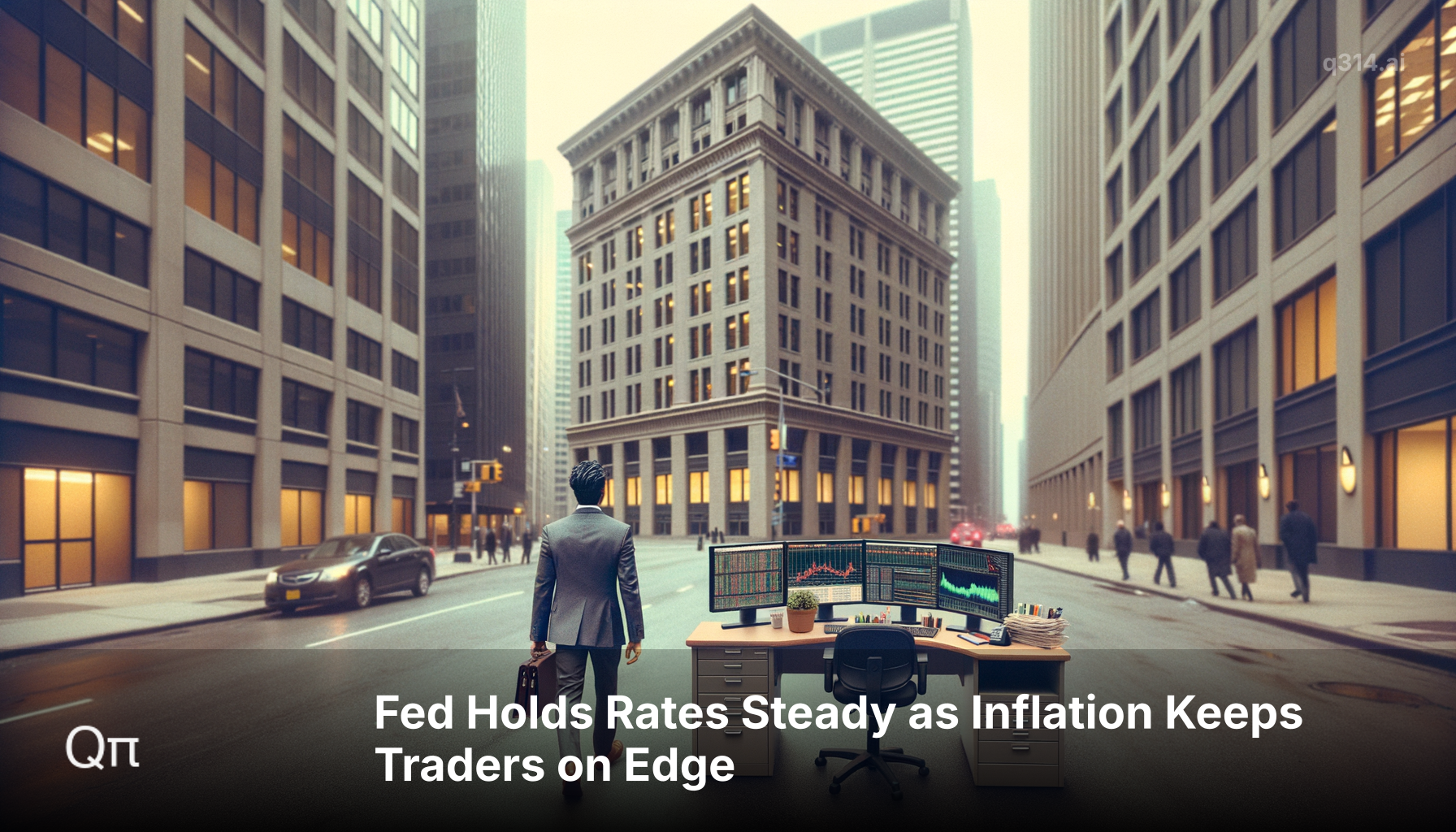
Fed Holds Rates Steady as Inflation Keeps Traders on Edge
The Federal Reserve left rates unchanged in March, but higher inflation forecasts and a tougher market reaction suggest cuts may take longer than investors hoped.
Tesla Stock Rally Faces a Reality Check After Q1 Miss
Tesla stock is still trading on AI and robotaxi hopes, even after a weak first-quarter delivery report. The rally has been powerful, but the valuation leaves little room for mistakes.
Gold and War: Why Bullion Still Rules the Fear Trade
Gold is back at the center of global markets as war risk, oil shocks and central bank buying collide. The metal remains the cleanest hedge against a conflict that keeps spilling into inflation, rates and currencies.

Seven Statistical Frameworks Behind Systematic Hedge Fund Research
Why quantitative investing is less about one “black box” model than about assigning different modelling frameworks to different research, forecasting and risk tasks

AI for Trading is Here: But ChatGPT is the Wrong Approach
Paradigm shift. There is a fundamental change happening in how people interact with financial information. AI is here. Increasingly, individuals are turning to ChatGPT not just for explanations, but for direction. Questions that would previously have gone to an advisor, a broker, or hours of research are now condensed into a single prompt: “What should I invest in?” On the surface, this feels efficient. The answers are immediate, articulate, and often sound well reasoned. Indeed, data from organisations such as Pew Research Center and Statista suggests that a growing share of users are already using AI tools in this way, including for financial decision-making. You may have even tried it yourself (we know we have!). But there is a fundamental issue here, and a dangerous one. This type of interface creates a sense of capability that the underlying system simply does not have. ChatGPT is extremely capable for many things (and we like using it too!) but not as a financial advisor, as an LLM is natural-language based not quantitative like an ML would be, and more importantly it can be biased.

Get Started in Quant Trading: 5 Strategies To Build First
Get Started in Quant Trading: 5 Strategy Types To Build First Quantitative trading can appear intimidating to newcomers. The field is often associated with complex mathematics, PhD-level research teams, and institutional trading infrastructure. In reality, many successful systematic strategies are built on relatively simple statistical principles. The complexity typically lies not in the concept of the strategy itself, but in the discipline of implementing it consistently, testing it rigorously, and executing it without emotional interference. For traders transitioning from discretionary trading into systematic trading, the most effective starting point is to focus on a small number of well-understood strategy types. These strategy types form the backbone of many professional quantitative portfolios and provide a strong foundation for experimentation and refinement. This article outlines five core strategy types that beginners can build and test as their first systematic trading systems.

Why Systematic and Algorithmic Trading Benefits Investors
Financial markets have evolved dramatically over the past two decades. Advances in computing power, data availability, and market infrastructure have fundamentally changed how trading decisions are made. Increasingly, the most sophisticated participants in financial markets rely not on discretionary judgement, but on systematic and algorithmic approaches. For investors, the shift toward systematic trading reflects a simple reality, human decision making in financial markets is often flawed. Quantitative strategies offer a structured alternative, one that replaces emotion and intuition with data, rules, and statistical validation.